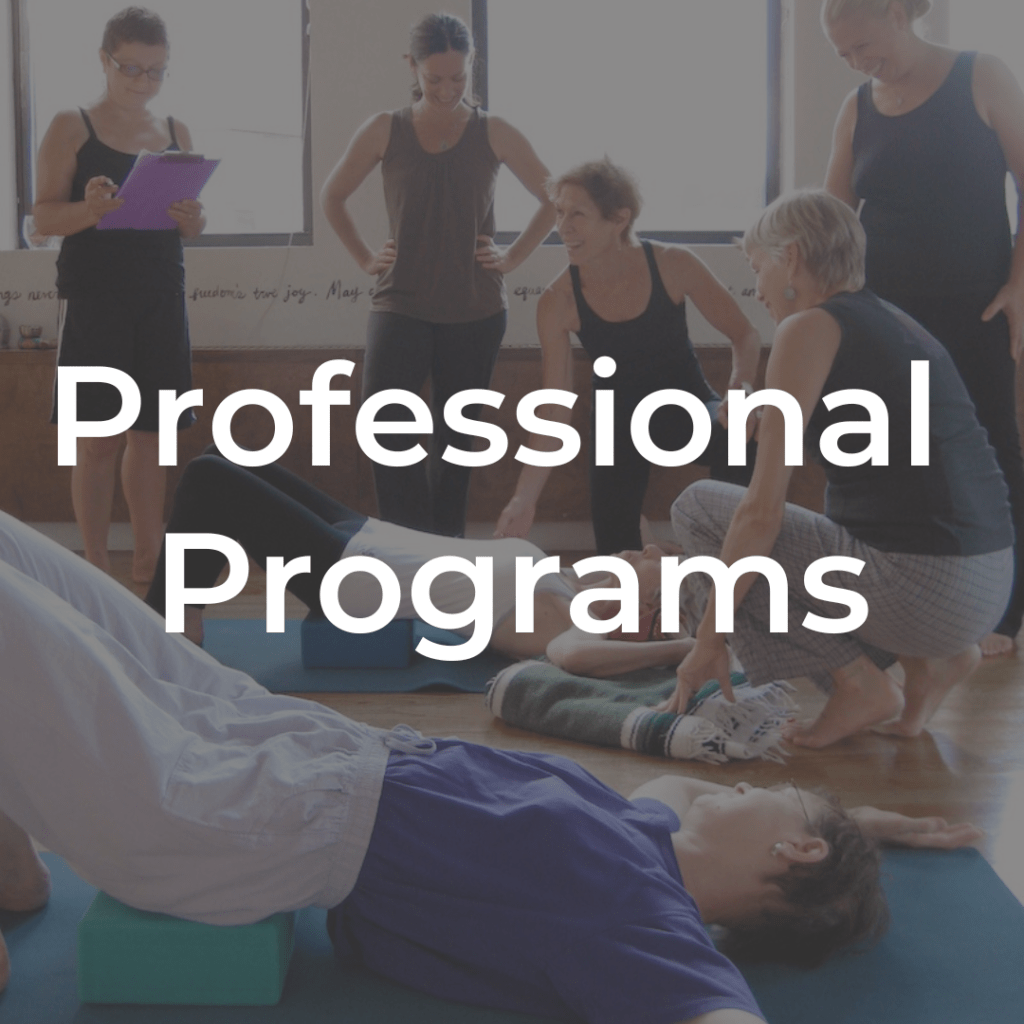
Most yoga teachers know that breath matters. But do you know why — in precise, physiological terms — and how to apply that knowledge to serve cancer patients and survivors safely and effectively?
That’s what Teri Gandy-Richardson (a senior teacher at yoga4cancer) set out to explore in her recent Oncology Yoga masterclass, and the session delivered. Watch the replay below, or read on for the key takeaways.
Inside the class
Teri moved participants through the breath–lymph connection not as abstract theory, but as embodied practice. The session explored how the y4c breath — nasal, rhythmic, and matched to movement — creates a physiological environment that actively supports recovery. How the inhale prepares the body for action. How the exhale invites return, release, and restoration. And critically, how specific breathing practices widely used in general yoga can actually be contraindicated for cancer survivors — and what to do instead.
What made the class particularly valuable was the translation from science to mat. Participants left not just understanding why breath works the way it does in the y4c methodology, but having experienced it firsthand and with enough knowledge to begin applying it in their own teaching.
The exhale is doing more than you think
We tend to focus on the inhale — big breath in, open the chest, expand. But in the yoga4cancer methodology, the exhale is where much of the healing work happens.
When you exhale, the diaphragm relaxes upward — and in doing so, it gently massages the thoracic duct, the body’s largest lymphatic vessel, which passes directly through the diaphragm. That massage isn’t incidental. It’s the primary mechanism by which lymphatic fluid moves through the body. The lymphatic system has no pump of its own. It relies on movement — and breath — to circulate the lymphocytes that form the backbone of immune function.
For cancer patients and survivors, this is not a minor detail. It’s foundational.
The exhale also activates the vagus nerve and the parasympathetic nervous system — the body’s “rest and digest” response. Extended, intentional exhalation reduces cortisol, lowers blood pressure, improves emotional regulation, and increases heart rate variability. One study found that cyclic sighing — a pattern of prolonged exhales — outperformed traditional mindfulness for lifting mood.
This is the science Teri taught from. And it changes how you teach.
Why this belongs in every Oncology Yoga teacher’s toolkit
Cancer treatment — chemotherapy, radiation, surgery — disrupts the very systems that breath supports. Lymphatic function is compromised. The nervous system is dysregulated. Fatigue, anxiety, and immune vulnerability are daily realities for millions of survivors worldwide.
A yoga teacher who understands this can design every class — every sequence, every cue, every breath instruction — to work with the body’s healing mechanisms. That’s the difference between a general yoga class and an oncology yoga class. And it’s the difference the y4c Certificate Program is built on.
For the full deep-dive on the science, read: The Exhale Is the Key to Cancer Recovery
Ready to go deeper?
What Teri demonstrated in one class is a window into what the y4c Certificate Program teaches in full — across 75 hours of evidence-informed training designed for yoga and healthcare professionals worldwide. The breath is one piece. The program covers cancer biology, treatment side effects, safe pose selection, the y4c methodology, teaching practicum, and mentor support.
More than 3,000 professionals across 39 countries have completed it. They are teaching in hospitals, cancer centers, studios, and online. Explore professional programs.