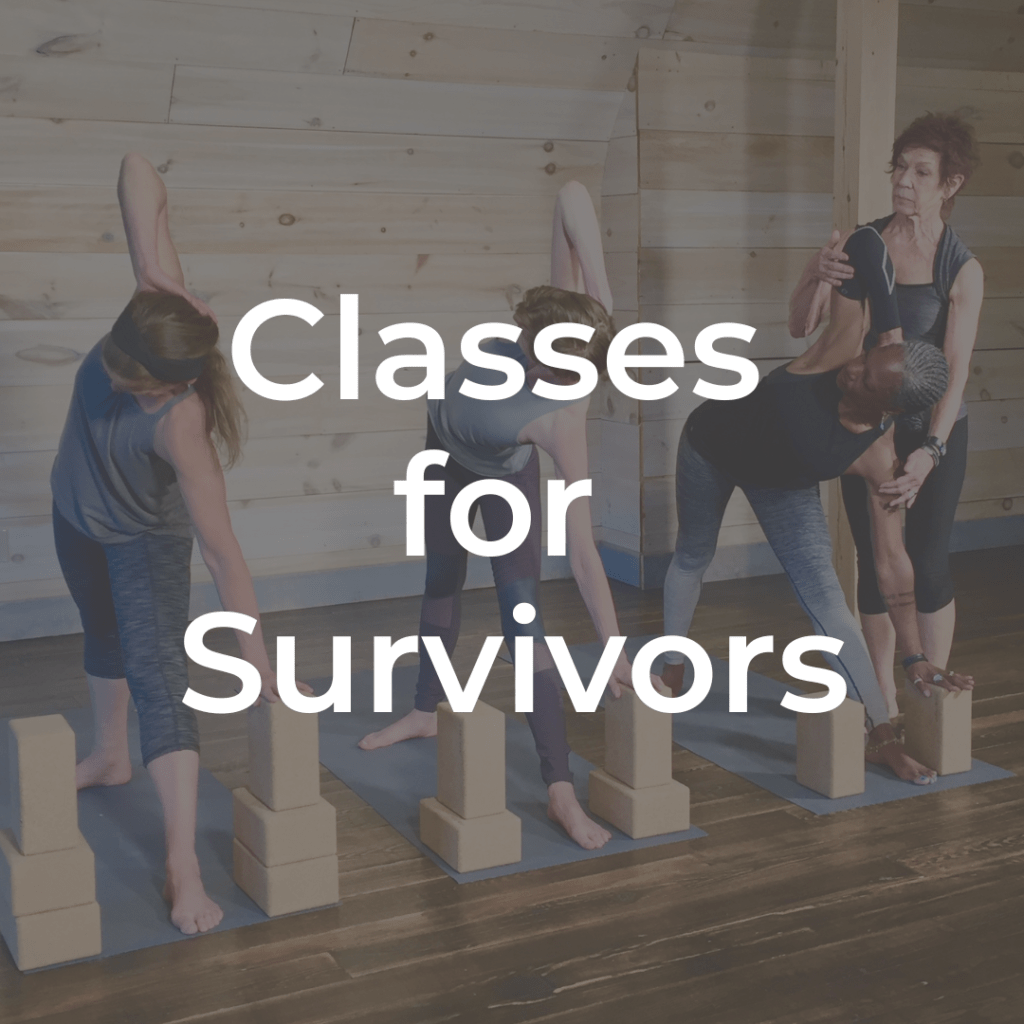
In contemporary healthcare, caution is both necessary and appropriate. Cancer treatments can result in complex and variable physiological changes, including fatigue, neuropathy, bone loss, and reduced functional capacity. As a result, movement recommendations are often conservative, with patients frequently directed toward “gentle” or low-intensity activity, including yoga.
However, an important question warrants consideration: Can well-intentioned caution lead to under-treatment in movement-based care?
⸻
Under-Treatment as a Clinical Concept
In healthcare, under-treatment is a recognized concern. It occurs when interventions are insufficient to address the condition or symptom burden effectively. While often driven by a desire to minimize risk, under-treatment can contribute to prolonged dysfunction, reduced quality of life, and delayed recovery.
This principle is directly relevant to cancer survivorship. Persistent symptoms—particularly fatigue, deconditioning, and reduced physical function—require active management. Current guidelines from the American College of Sports Medicine and the American Cancer Society recommend at least 150 minutes of moderate-intensity activity per week, alongside strength training, as part of standard survivorship care (Campbell et al., 2019; Schmitz et al., 2019).
Yet adherence remains low. Population-level data suggest that the majority of cancer survivors do not meet these recommendations, highlighting a gap between clinical guidance and real-world implementation.
⸻
The Parallel in Yoga-Based Interventions
Yoga is widely used in cancer care and supported by a growing body of literature demonstrating benefits for fatigue, sleep disturbance, psychological distress, and aspects of physical function (Mustian et al., 2013; Niu et al., 2023; Ma et al., 2025). However, yoga is not a standardized intervention. Its effects depend on how it is delivered, including intensity, progression, and instructional approach.
In practice, many cancer patients and survivors are directed toward “gentle yoga” or exclusively restorative approaches. While these formats may support relaxation and initial engagement, they are often characterized by low intensity and limited progression.
From a physiological perspective, this raises a concern: interventions that do not meet sufficient thresholds of dose and intensity may not produce meaningful adaptation.
Exercise oncology research consistently demonstrates that improvements in strength, endurance, and fatigue are dependent on appropriate stimulus and progression. Interventions that are too low in intensity may be safe, but insufficient.
⸻
Safety, Effectiveness, and the Principle of Non-Harm
This tension between safety and effectiveness is not unique to yoga. It reflects a broader ethical consideration in healthcare.
The principle of Ahimsa, or non-harming, in the Yamas is often interpreted as avoiding injury. However, in a clinical context, non-harming is more appropriately understood as an active responsibility to support well-being. Similarly, the Hippocratic Oath emphasizes not only the avoidance of harm, but the provision of appropriate and effective care.
In both traditions, harm is not limited to overt injury. It may also include omission—failing to provide interventions that are necessary to support recovery, function, and quality of life.
Applied to oncology yoga, this suggests that:
• overly cautious programming may reduce immediate risk
• but insufficient challenge may fail to address key impairments
A non-harming approach must therefore balance protection with therapeutic intent.
⸻
Movement as a Required Intervention
Cancer and its treatments contribute to measurable declines in:
• muscle strength
• aerobic capacity
• balance and coordination
• functional independence
These changes are not self-resolving. Without appropriate intervention, they may persist or worsen over time. Movement is not simply beneficial—it is required.
Yoga can be an effective modality within this framework because it integrates:
• breath regulation
• functional movement
• progressive loading
• attentional awareness
However, these benefits are contingent on program design. Static or minimally progressive approaches may support comfort but are less likely to influence physiological outcomes.
⸻
Reframing “Gentle” and Expanding the Model
The distinction in oncology yoga is not between “gentle” and “non-gentle,” but between:
• static vs. progressive interventions
• generalized vs. individualized programming
Chair-based or low-load practices, for example, may be entirely appropriate—particularly in early recovery or for individuals with significant limitations. However, they must be designed with progression in mind to remain therapeutically relevant.
Effective programs:
• adapt to the individual
• incorporate scalable intensity
• progress over time
• use breath to regulate effort
• address functional movement patterns
This approach aligns more closely with rehabilitation principles than with generalized fitness or wellness models.
⸻
The Role of Qualified Instruction
Another important factor is variability in instructor training. Yoga teachers are not uniformly trained in oncology-specific considerations, and healthcare providers may not differentiate between types of yoga when making referrals.
As a result, patients may receive interventions that are:
• safe but insufficient
• accessible but not progressive
• supportive but not rehabilitative
Addressing this gap requires greater alignment between healthcare systems and trained movement professionals who understand both safety considerations and the need for progression.
⸻
Toward a More Effective Model of Care
The integration of yoga into oncology care has evolved over the past 25 years. Early approaches emphasized “gentle” and restorative practices, reflecting a precautionary stance in the absence of robust evidence. Today, a growing research base demonstrates that yoga can safely improve fatigue, sleep, psychological distress, and aspects of physical function, while also highlighting the importance of dose, intensity, and progression. 
At the same time, exercise is now recognized as a standard component of cancer care, yet implementation remains limited, with persistent gaps in referral and access.  Within this context, low-intensity or non-progressive approaches may support engagement but are not consistently aligned with current evidence.
A more effective model requires a shift toward evidence-informed, individualized, and progressive interventions. Yoga, when appropriately designed and delivered, can contribute meaningfully to this model as a flexible, delivery-dependent approach to survivorship care.
⸻
Conclusion
Caution is an essential component of cancer care. However, caution alone is not sufficient to support recovery.
A more complete application of Ahimsa—and of the principles reflected in the Hippocratic Oath—requires not only avoiding harm, but ensuring that interventions are meaningful, appropriate, and effective.
The question is not whether yoga should be offered. It is whether it is delivered in a way that can truly support the needs of cancer patients and survivors.
⸻
References:
- Campbell KL, Winters-Stone KM, Wiskemann J, et al. Exercise guidelines for cancer survivors: Consensus statement from international multidisciplinary roundtable. Medicine & Science in Sports & Exercise. 2019;51(11):2375–2390. doi:10.1249/MSS.0000000000002116.
- Schmitz KH, Stout NL, Maitin-Shepard M, et al. Moving through cancer: Setting the agenda to make exercise standard in oncology practice. CA: A Cancer Journal for Clinicians. 2019;69(6):468–484. doi:10.3322/caac.21579.
- Mustian KM, et al. Yoga for sleep quality among cancer survivors. J Clin Oncol. 2013.
- Niu N, et al. Health benefits of yoga for cancer survivors: systematic review. Asia Pac J Oncol Nurs. 2023.
- Ma X, et al. Effects of yoga on fatigue and psychological distress. Cancer Nurs. 2025.
- Venkata Karthik V, Reddy HC, Rudramurthy H, et al. Integrative role of yoga and naturopathy in cancer rehabilitation: A narrative review. Cureus. 2026;18(3):e105544. doi:10.7759/cureus.105544.
- Kytle J, Sulik G, Roff C, et al. Yoga Interventions in Cancer Care: Evidence, Mechanisms, and Clinical Application Across the Continuum. 2026 White Paper (copy-only review draft).
- Rock CL, Thomson C, Gansler T, et al. American Cancer Society guideline for diet and physical activity for cancer survivors. CA: A Cancer Journal for Clinicians. 2022;72(3):230–262. doi:10.3322/caac.21719.