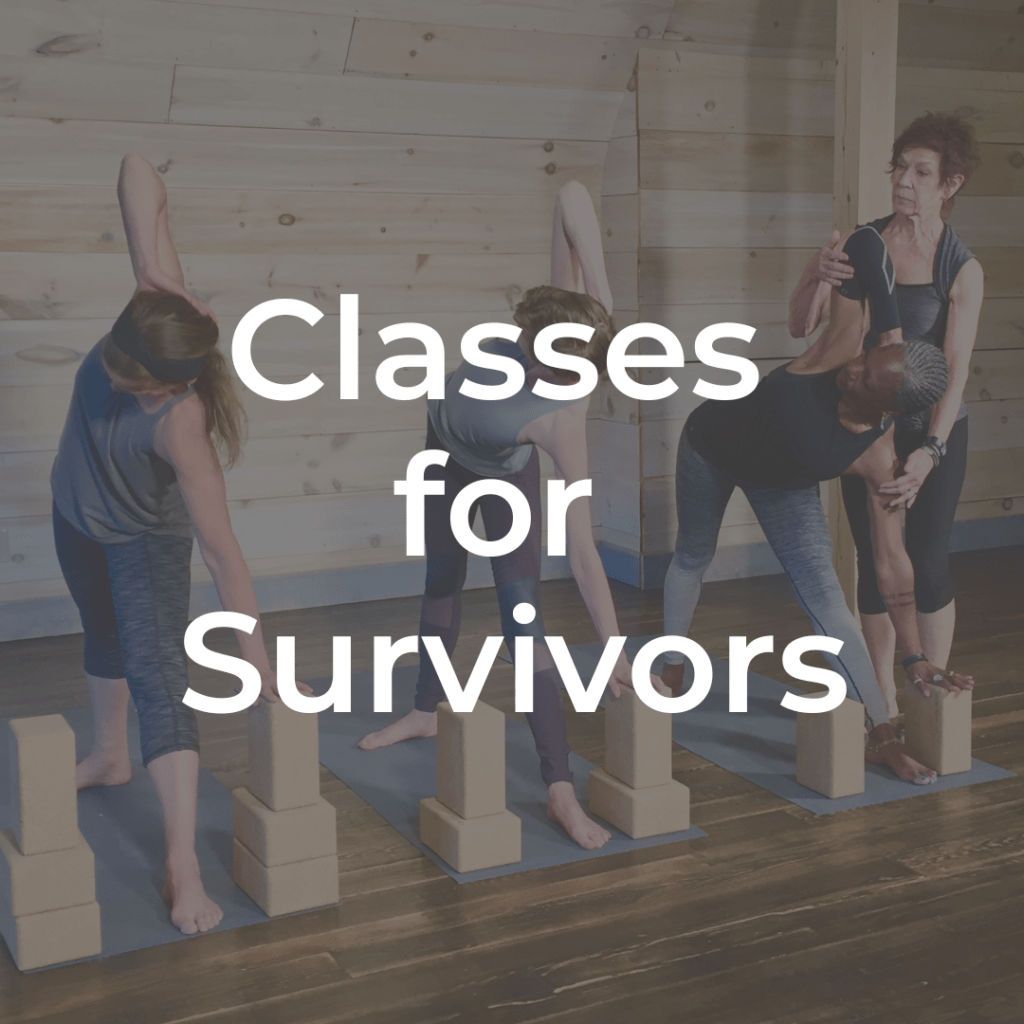
If you’ve never taken a yoga class, or haven’t taken one since your diagnosis, it’s hard to know what you’re signing up for. Will it be too hard? Too easy? Will the teacher understand what treatment has done to your body?
An oncology yoga class is built for people living with and beyond cancer. A yoga4cancer class follows a consistent structure, designed to manage treatment side effects and build strength safely. Knowing that structure ahead of time makes walking into your first class, or logging on, a lot easier.
It also counts. A regular practice contributes toward the American Cancer Society’s recommendation of at least 150 minutes of moderate physical activity each week.
Six elements of a yoga4cancer class

Breath & Stillness
Class begins seated, with simple breathing practices that help calm the nervous system and bring your attention into the room.

Warm Up Vinyasa
Gentle, flowing movements linked with the breath (“vinyasa” means connecting breath and movement). The warm-up gets the joints moving and circulation going before more active work.

Movement & Strength
Standing and active poses that build muscle and support bone health, both of which can be affected by cancer treatment. Props help you work at the right level for your body that day.
Balance
Poses that train steadiness and coordination. Balance matters because some treatments affect sensation in the feet or cause fatigue, which can raise the risk of falls. A wall or chair is always an option.

Restorative & Rest
Supported poses that let the body recover. Every class ends with rest, and you’re always welcome to rest at any point.
Community
Practicing with others who understand what you’re going through is part of the practice. Many students say this is what keeps them coming back, whether they practice in person or online.
Why the structure matters
It starts where you are. Beginning seated with the breath gives everyone a chance to arrive, whether they came from an infusion, a long day at work, or a sleepless night. It also gives the teacher a moment to notice how the room is doing.
It moves the whole body before asking more of it. The warm-up isn’t a formality. The lymphatic system has no pump of its own and relies on movement to circulate fluid. Moving the joints and breathing deeply prepares the body for strength work and supports a system that treatment often affects.
It builds strength, not just flexibility. Many people expect oncology yoga to be all lying down and stretching. Rest is part of it, but so is work. Chemotherapy, hormone therapy, and time spent less active can all take a toll on muscle and bone. Standing poses, supported by props, help rebuild what treatment can take away.
It trains balance on purpose. Some treatments affect sensation in the feet or cause fatigue and dizziness, which raises the risk of falls. Balance practice, with a wall or chair close by, builds steadiness in a setting where losing balance is safe.
It always ends with rest. Recovery is part of the practice. Every class closes with supported rest, and students are encouraged to rest whenever they need to, not only at the end.
It happens with other people. Many students say the community is what keeps them coming back. Practicing alongside people who understand cancer without needing it explained matters, in person or online.
Your class, your pace
No two days during treatment are the same. Someone a week out from surgery and someone five years past treatment can practice in the same class, because a well-trained oncology yoga teacher offers options for every pose. Taking a lighter option or resting is part of a good practice, not a step back.
That’s the difference between an oncology yoga class and a general one. It isn’t that general yoga is wrong. It just wasn’t designed with cancer treatment in mind. An oncology yoga teacher knows which side effects to plan for, which positions need modifying, and how to keep the class active and safe for everyone in the room.
For yoga teachers and healthcare professionals
The six elements are more than a class outline. They’re a framework for safety and efficacy. Each one addresses specific, predictable effects of cancer and its treatment: stress and anxiety, lymphatic health, loss of muscle and bone, neuropathy and fall risk, fatigue, and isolation.
The structure gives teachers a repeatable way to plan classes that stay active without putting students at risk. It also makes classes easier to describe to referring clinicians and to patients deciding whether to try one.
Next steps
If you’re living with or beyond cancer, or caring for someone who is:
- Take our free course, Introduction to Oncology Yoga: For Every Stage of Treatment and Recovery. It’s self-paced and needs no yoga experience.
- Find a certified yoga4cancer teacher near you or online.
If you’re a yoga teacher or healthcare professional:
- Start with Oncology Yoga – A 5 Hour Short Course for the foundations.
- Go deeper with the 75-Hour Certificate Program to teach oncology yoga with confidence.