
Ahimsa — yoga’s principle of non-harming — is often understood as a restraint: don’t push, don’t force, don’t injure. In yoga4cancer training, we teach it as something more active: an ongoing, attentive responsibility for a student’s well-being, not simply the avoidance of causing harm.
That principle is the foundation for one of the clearest standards in yoga4cancer teaching. A teacher demonstrates just enough to show the way into a pose, then spends the rest of class observing, cueing, and adjusting for what each student actually needs, rather than moving through the sequence themselves. It’s a safety standard as much as a philosophical one, rooted in what’s at stake for the student in front of you: their safety, and whether the practice actually does what it’s meant to do.
What Oncology Yoga Teachers Do Instead of Self-Practicing
Not self-practicing doesn’t mean standing still and saying nothing. It means a teacher’s attention splits into three deliberate acts instead of one continuous personal practice.
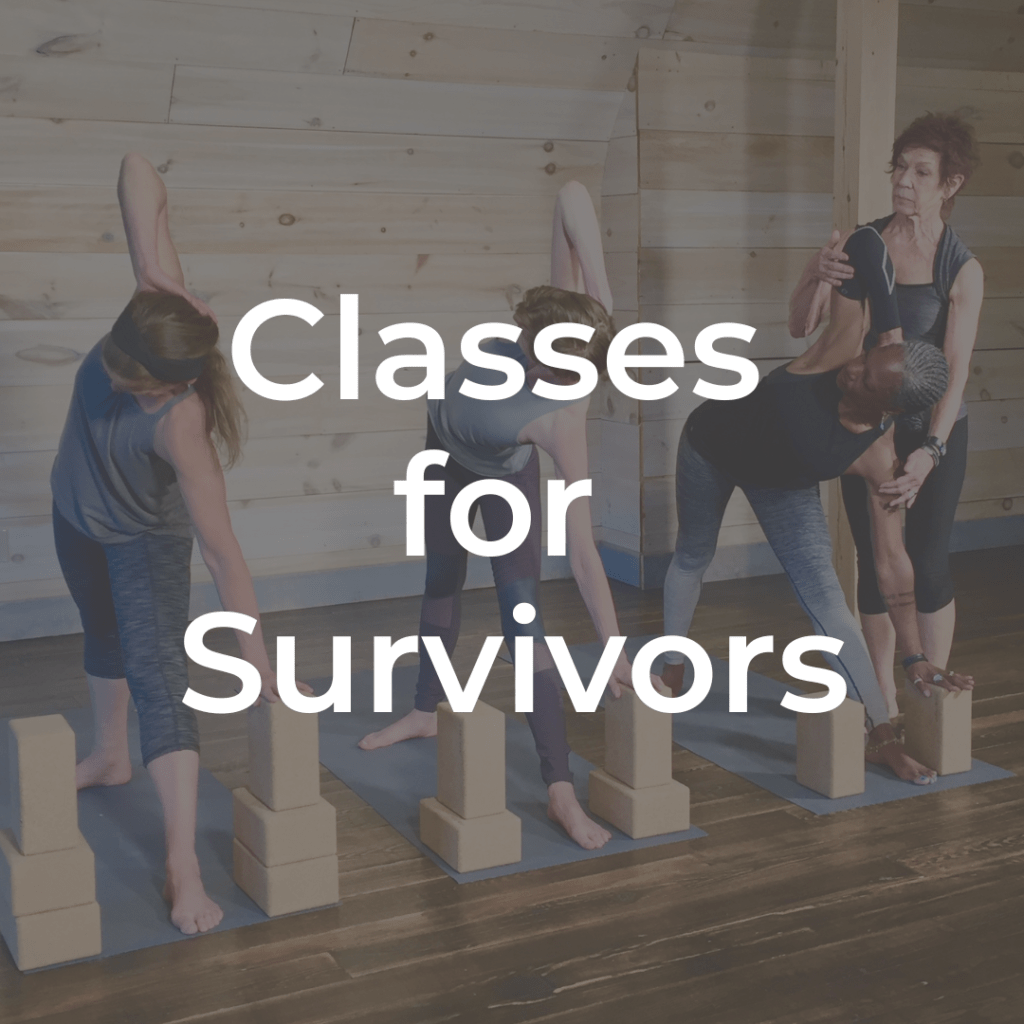
Demonstrate selectively. How much a teacher demonstrates depends on the pose, the sequence, and the students in the room — but whatever is shown is always the most accessible version, regardless of the teacher’s own flexibility. Our certification training is direct about this: “Don’t sit according to your own personal level of flexibility, because most people will follow what you do instead of what is best for themselves.” Sometimes the better choice is to demonstrate using a student rather than your own body, which takes the class out of “watch what I can do” and puts it squarely in front of what’s actually possible for the people in the room.
Observe meaningfully. Once the demonstration is done, attention moves outward — to breath, to posture, to the small signs of strain or ease on each individual body. That’s only possible if a teacher isn’t also managing their own pose in that moment.
Guide with modification. What a teacher sees becomes the next cue: a prop offered, a variation suggested, a pace slowed. An Oncology Yoga Professional, as our certification training puts it, “guides a practice through verbal cues and keen observations” — words and eyes, not a demonstration running in parallel with the class.
Together, those three acts are what replace “doing the pose yourself.” They ask more of a new teacher than simply moving through the sequence does — but they’re also the only way to actually deliver a safe and effective practice to a room full of people whose needs aren’t yours.
Who Cancer Patients and Survivors Bring Into the Room
That standard matters because of who a yoga4cancer class is actually built for. Most students are not experienced yogis. Many have never rolled out a mat before their diagnosis, and they arrive carrying real physical, cognitive, and emotional barriers that have nothing to do with motivation or willingness.
Physically, cancer treatment leaves a wide range of after-effects: fatigue that can shift day to day, neuropathy that causes numbness or pain in the hands and feet and affects balance, bone loss or fracture risk from certain treatments and radiation, lymphedema risk that changes which movements are safe for an arm or leg, surgical sites and scar tissue that limit range of motion, skin sensitivity from radiation, and chemo ports that may be tender and aren’t always visible under clothing. Cognitively, many students describe “chemo brain” — real, documented difficulty with focus and processing. And emotionally, students carry fear, grief, and uncertainty that a cancer diagnosis brings, often walking into their first-ever yoga class already on edge.
None of this is uniform. Like cancer itself, every body in the room is different, which is exactly why a teacher can’t rely on a fixed sequence, a memorized pose list, or their own body as the reference point. The only way to meet each student where they actually are is to be watching them.
What Observation Catches That Self-Practicing Misses
This is where watching earns its place as a safety standard rather than a nice-to-have. Observation catches two kinds of problems that self-practicing simply cannot: issues before they become injuries, and issues the student themselves doesn’t know are happening.
The first is straightforward — a teacher scanning the room can catch a student favoring a numb foot, gripping through pain, or losing balance before it becomes a fall. The second is subtler, and arguably more important. Our certification training teaches that survivors are “often not aware when unnecessary muscular engagement is happening, nor understand how to position their body to experience complete relaxation.” A student can be lying in a fully propped restorative pose, believe they’re resting, and still be gripping through the shoulders or holding the breath — sabotaging the very relaxation response the pose is meant to produce. Physiologically, that response — first described by Harvard cardiologist Herbert Benson and studied for decades since at the Benson-Henry Institute for Mind Body Medicine — depends on real conditions being met: proper support, and a breath pattern with an exhale a little longer than the inhale, which is what actually engages the vagus nerve and shifts the body into “rest and digest.” A teacher who is watching can see the tension the student can’t feel, and cue accordingly. A teacher who is practicing alongside them cannot.
This is Ahimsa in practice. A teacher moving through their own sequence while leading class is, at best, offering a passive version of non-harming: avoiding harm by modeling a comfortable range, without actively watching to know what any one student in the room actually needs. There’s a related distinction in the Yamas and Niyamas — the Yamas govern how we relate to others, the Niyamas govern personal discipline like Svādhyāya, self-study. A teacher’s own practice belongs to their own mat, on their own time. The moment they’re teaching, the center of gravity shifts outward, to the room.
How yoga4cancer Certification Training Teaches This
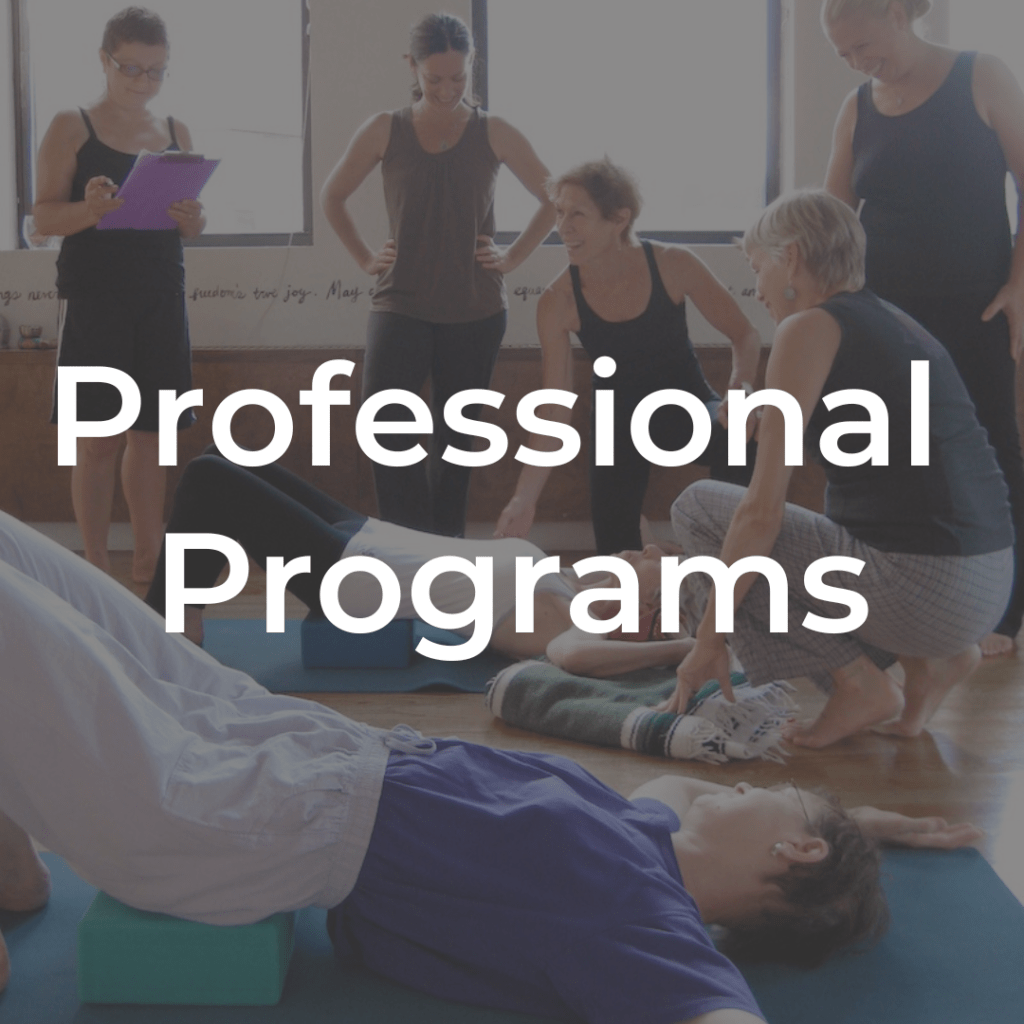
This is why, in the yoga4cancer certification program, one of the most common notes trainees receive on their practicum submissions has nothing to do with pose selection or sequencing — it’s about self-practicing. Mentors are trained to ask a simple question while reviewing a recorded teaching sequence: could this teacher tell you, right now, how each student in the room was actually doing? If the teacher was moving through the full sequence themselves, the honest answer is usually no.
It’s a harder standard than it sounds, and it’s also the one that makes the work both safe and effective for a population that often can’t advocate for its own discomfort. If this way of teaching resonates with you — grounded in the realities of who cancer survivors are, in the physiology of what actually helps them, and in a philosophy that treats witnessing as an active form of care — explore what yoga4cancer certification actually asks of you.
Explore Oncology Yoga Classes, Courses and Research

Find a y4c trained teacher near you at yoga4cancer.com/find-a-teacher, or explore the full Beginners Series.